Background and motivation
The transformation of energy systems towards climate neutrality requires not only a massive expansion of renewable energy, but above all a new understanding of the interaction between fluctuating generation and local consumption. In particular, the rapid expansion of PV and wind power is fundamentally altering the characteristics of grid load: this is increasingly driven by (volatile) generation rather than demand.
In addition to the challenge of long-distance transmission at higher grid levels, densely populated urban areas with a high connection density and limited infrastructure capacity pose particular challenges for urban electricity grids. This can lead to local bottlenecks, concurrency effects and a significant increase in grid volatility. Furthermore, synchronised consumption responses to dynamic market incentives or price levels can result in considerable peaks in grid load.
Urban buildings and neighbourhoods can play an increasingly important and active role in this regard, not only by optimally absorbing local and regional renewable energy generation through flexibility measures, but also by responding whilst taking local grid load into account.
Objective
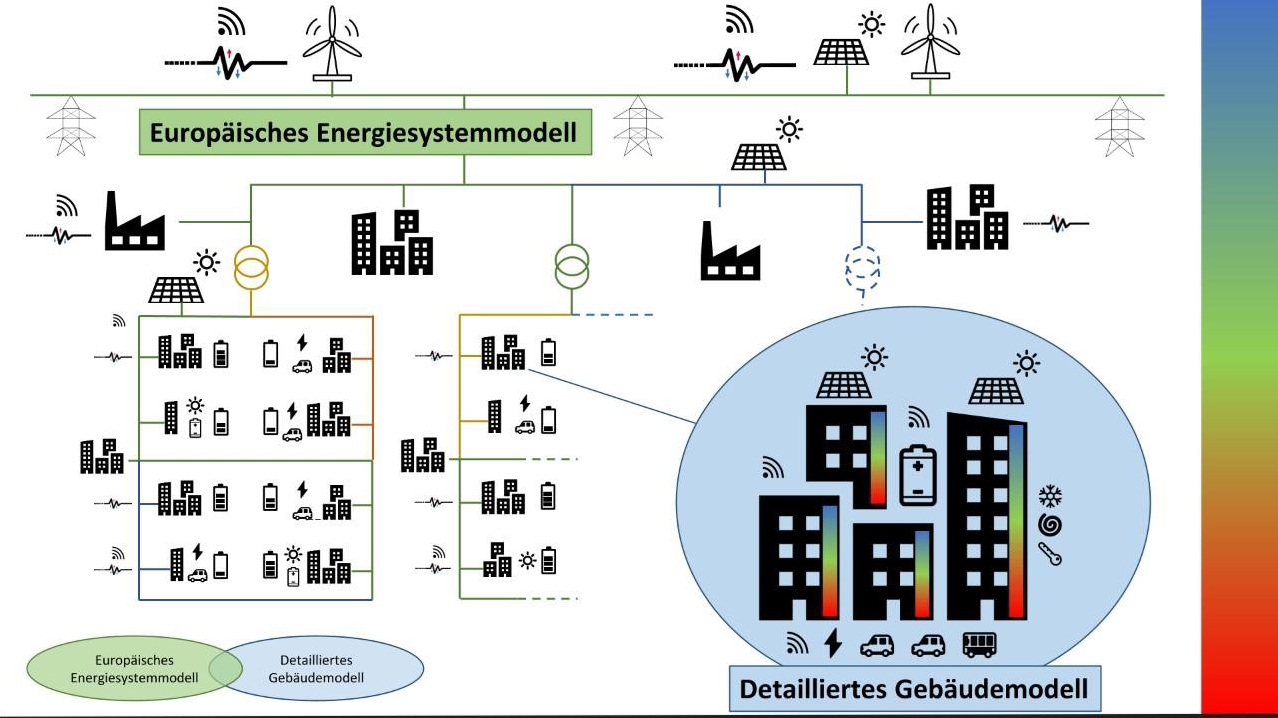
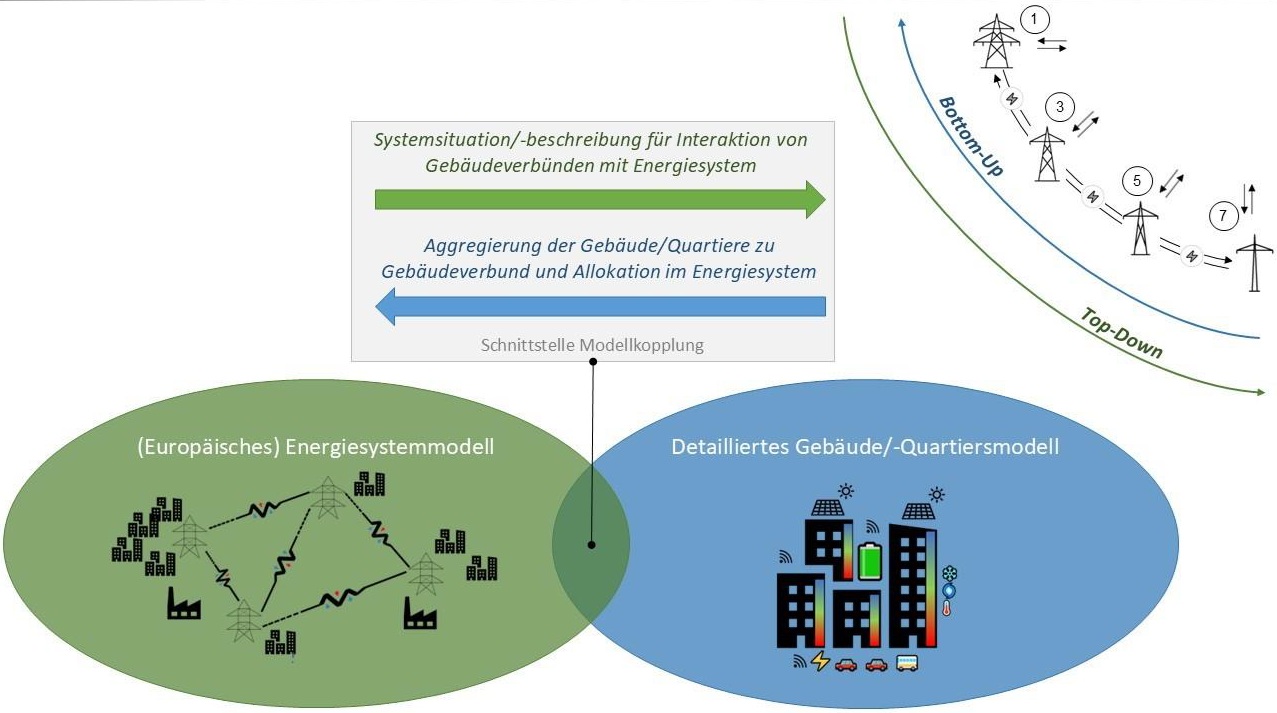
The Building4GridRes project is developing a holistic, multi-scale assessment and control concept for urban energy systems, with a particular focus on technical, systemic and socio-ecological grid contributions, as well as the model-based optimisation of flexibility strategies using data-driven methods. In doing so, technical (e.g. grid load profiles), systemic (e.g. release signals), as well as socio-ecological and economic criteria are integrated into the assessment, whilst consumption and storage strategies are analysed at building and neighbourhood level, modelled from the grid’s perspective and evaluated within the context of urban structures. The focus is on developing a grid contribution assessment system, modelling and simulating urban distribution network structures under realistic scenarios, testing different scenarios in a laboratory environment, and assessing the environmental and social impacts of various flexibility measures.
Innovative content and added value
- Development of a multi-scale assessment model for the grid contribution of urban energy systems
- Integration of socio-ecological parameters into technical flexibility assessments
- Integration of systemic and technical (grid-specific) levels of analysis
- Combination of data-driven control design with physical-technical grid models
- Use of reinforcement learning to optimise flexibility decisions subject to grid constraints
- Development of new indicators for resilient urban grid infrastructures
- Knowledge generation for regulatory and planning guidelines in an urban context
Transferability and scalability
The models and evaluation criteria developed are designed to be modular and adaptable to different levels of urban density, building/neighbourhood types and network levels (NE4–NE7), thereby enabling their application in both large cities and medium-sized neighbourhoods. The social science component ensures the acceptance and scalability of the measures developed. The integration of reinforcement learning components enables continuous learning and adaptation to real-world operating conditions.